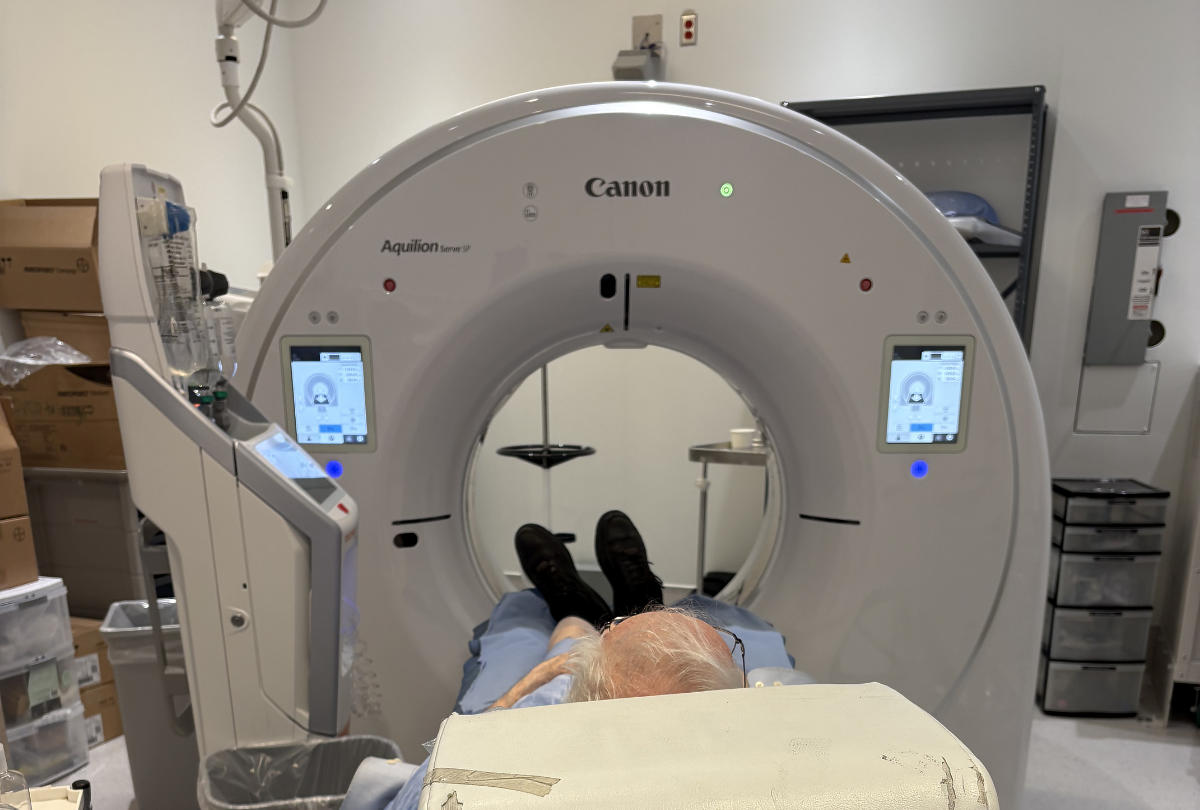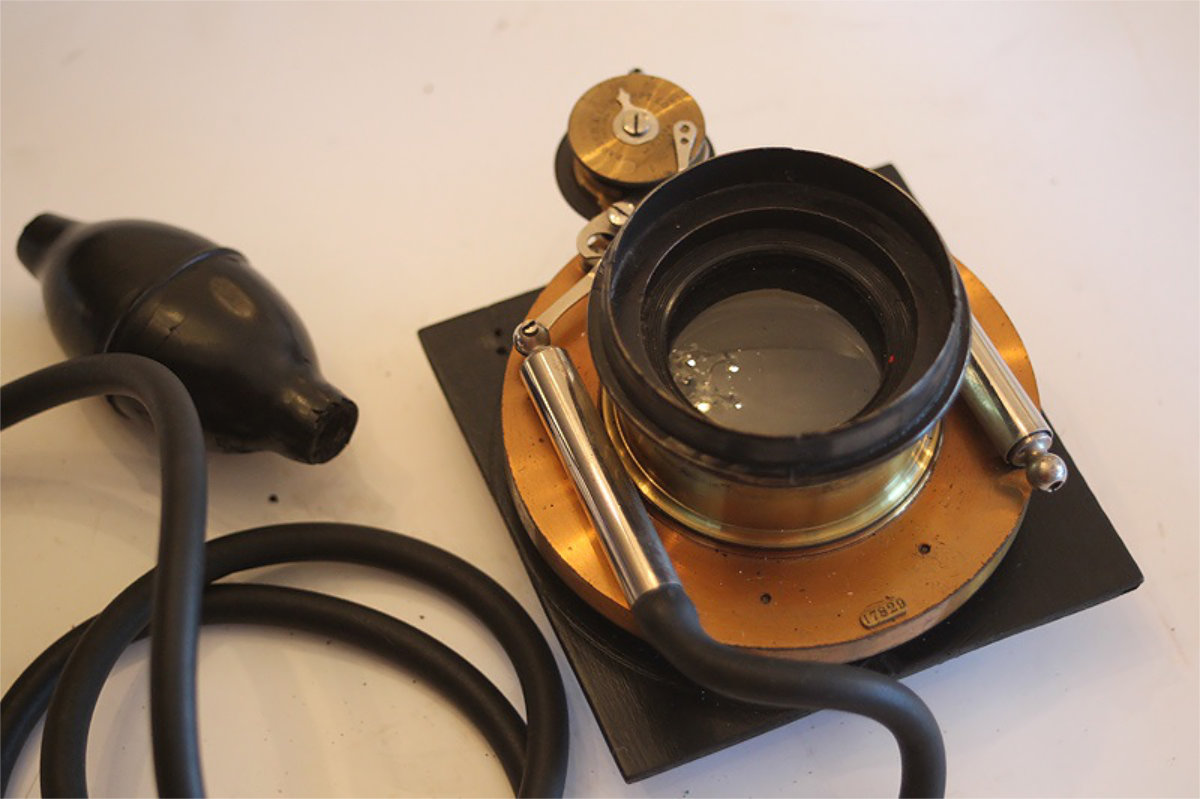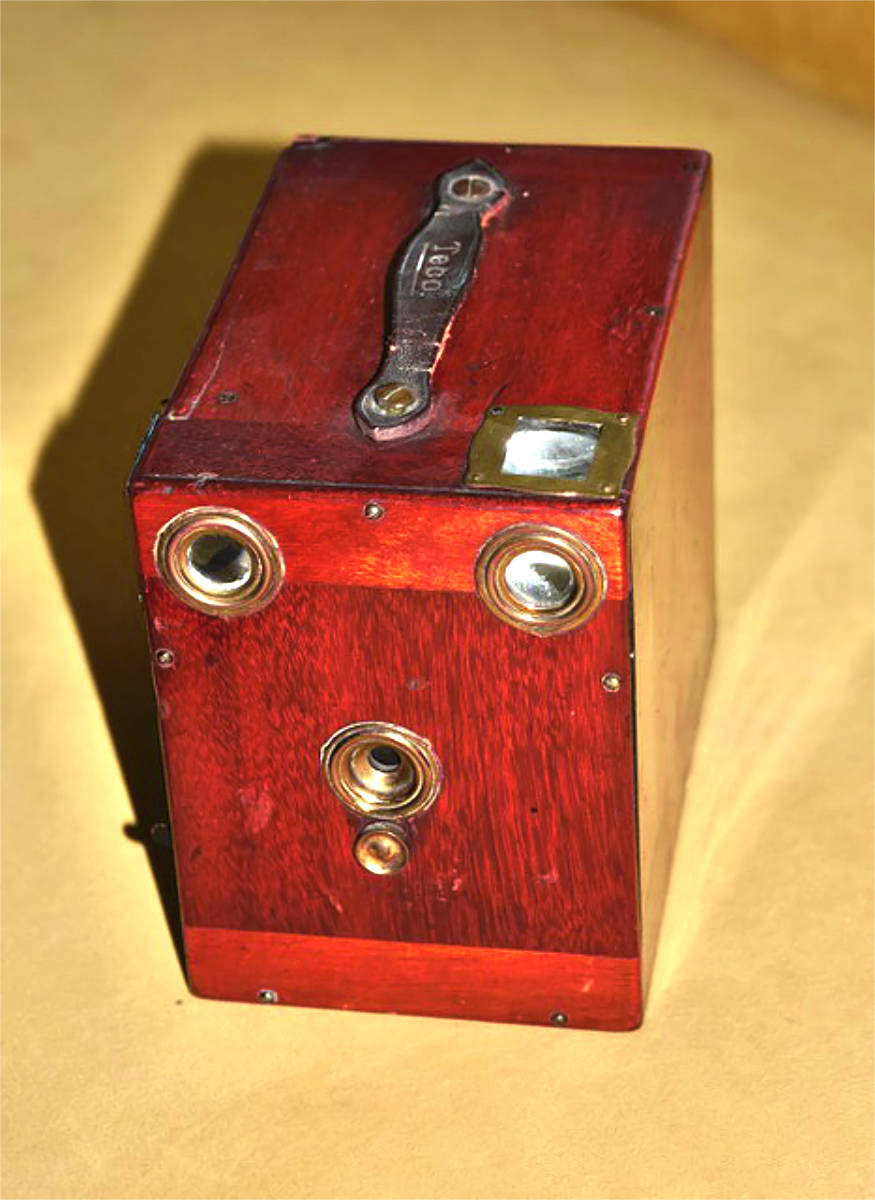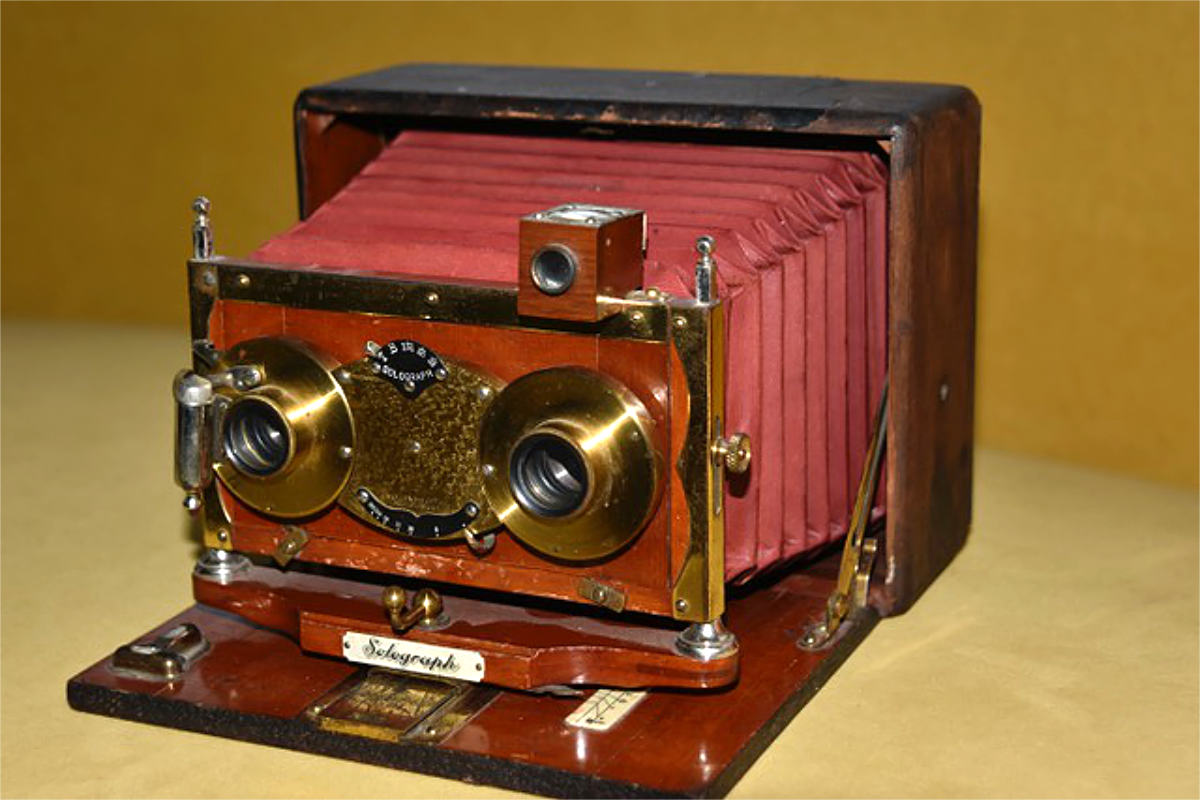
everything old is new again

digital portrait of a new baby adjacent to a century plus old head rest

Toronto. There is a saying that there is nothing new under the sun.

As a kid, I made a radio with a tiny bit of ‘fools gold’ (iron pyrite) and a thin copper wire ‘cat’s whisker’. This rustic semi-conductor radio wave detector was superseded by vacuum tubes which years late were succeeded by transistors (semi-conductors), in turn replaced by integrated circuits with tens of transistors and eventually millions of them (semi-conductors one and all)!

In 1839, Louise Daguerre announced his Daguerreotype process. It too was superseded by faster, wider spectrum solutions applied to paper, plates of glass, then to film, to be superseded by digital technology. This prompted some enthusiasts like Dr Mike Robinson (past president of the PHSC) to revert to the old processes with a modern twist.

Dr Robinson took the phot0 above with a digital camera, and later used a Daguerreotype camera and processed the image accordingly. What goes around, comes around.

The digital shot was used for the cover of the PHSC Journal issue 27-1.  Describing the photograph, editor Bob Lansdale writes, “[Then] PHSC Vice President, Mike Robinson, was quick to announce the arrival of his daughter Grania Grace Christie Robinson on the 26th of March, 2001 with a photographic announcement card.

“In the pattern of his Century Darkroom where he teaches daguerreotype and ambrotype processes, he created this setting with a 19th century headrest supporting a modern mobile seat.

“The thought-provoking digital image has since been circling the globe via internet. The young lady also held still for 14 seconds while Mike exposed a daguerreotype portrait.”

While you might not find such a charming baby photo at our events, you are sure to fine an item that is irresistible to you. Our spring fair is set for May 24th. Details will be pinned to this site as we near the fair date.

Posted in history | Tagged , , , , , , , | Comments Off on everything old is new again

that time again

Photoed Time issue
cover mock up

Toronto. Our favourite editor, Rita Godlevskis, sent off an email announcing the latest edition of Photoed magazine.

Rita titles this issue theme as, “Daylight savings/ Contemplating TIME” and comments, “The shift in clocks has us thinking about how artists have shared their work interpreting the idea of TIME”.

Collectors of old photos can search for photos  of the interpretation of time in years past at our events.

For example, collectors may find such photos at our coming May 24 Spring Fair along with lots of other nifty items to tweak the interest of both photo and camera collectors. I will add a poster and details to this site closer to the fair date.

Posted in activities-other | Tagged , | Comments Off on that time again

PHSC News 26-1 (Mar – plus Jan/Feb) now available

PHSC News 26-1 cover

Toronto. Springish weather …  and another issue to delight the eye – all 18 pages. Editor Gunn out did himself again, this time covering a slow news period of January and February 2026 in this March 2026 edition.

Issue 26-1 covers Awards (TMU Books), Events (Book launch – Hannah Maynard, Magic Lantern Society convention, Spring fair, tentative spring spring Auction. Columns like ‘From our web blog’, Photography, etc. Upcoming events,

Click on the cover icon at left to see a copy (this is our first 2026 issue).

This Issue has the great eye-grabbing layout and quality as expected from Patrick.  Just a reminder, we are an all volunteer operation, relying on its volunteers, and their talents!

Click here for a copy of 26-1 or visit NEWSLETTER above for this and all other issues. If  you prefer a release notice sent directly to your in-box, email news@phsc.ca and your email address will be added to our MailChimp list.

Posted in newsletter | Tagged , , | Comments Off on PHSC News 26-1 (Mar – plus Jan/Feb) now available

ever see a German hummingbird …

a Zeiss Ikon Kolibri   (1930-c1935)

Toronto. Our nearby photo society in Michigan, MiPHS,  announce the recent release of the 54-1 (spring 2026) issue of Photogram. This edition includes an article dubbed “The Poor Man’s Leica” – the Kolibri (German for Hummingbird).

The Kolibri is a Zeiss Ikon camera from the early 1930s and one of a number of ‘minicams’ of the era as the Leitz concept of “small negative/big print” gained enthusiastic  members in the face of the growing great depression of the 1930s.

MiPHS members can read Chuck Fehl’s article about this novel camera in the current 32 page issue of Photogram. To join MiPHS, see the instructions on the MiPHS web site (linked above).

Also, you may find  a Kolibri or two at our PHSC Spring Fair in south-west Toronto this coming May 24, 2026. Or if not, other items fitting a camera or old photograph collection. I will pin a poster and details to this site as we get closer to the fair date.

Posted in activities-other | Tagged , , | Comments Off on ever see a German hummingbird …

simpler times

a cheap reloadable camera from Lomography that replicates the feel of the disposables of film days

Toronto. Do you remember when we used film? At one time, it was popular at get-togethers to place a ‘disposable’ camera on each table for people to record the table ‘sitters’ etc, and leave the used cameras with the host.

Some collectors include these disposable cameras in their collection.

Harking back to that simpler time, film niche enthusiasts can now get a ‘reloadable‘, ‘disposable’  camera from Lomography to recreate the colours the disposable camera prints were noted for.

And if you are here in the big smoke, Check out Downtown Camera first!

PS. Our spring fair will be on May 24th this year. A poster will be pinned here as the date approaches.

Posted in activities-other | Tagged , | Comments Off on simpler times

do you TLR?

c1937 Rolleiflex 621 at PHSNE fair in April

Toronto. Snap Shots 31-7 was recently issued by the PHSNE. The newsletter announced their camera show ‘Photographica 93″ on Saturday, April 25th, 2026. An item featured in the show will be this Rolleiflex Standard 621 with a 75mm f/3.5 Zeiss Tessar lens.

The camera, based on the Tessar, would have been made around  1934 to 1937. It will be on the PHSNE table (until it is sold).

Join the PHSNE to get a copy of their newsletter and visit Photographica 93 this April 25th down in Newton, MA. to add to your camera collection/user gear.

Posted in activities-other | Tagged , , , | Comments Off on do you TLR?

all in a row

extension tubes for screw-mount Leica signed by Leitz NY

Toronto. Those wanting to make the odd close-up but not wanting to pay for fancy accessories resorted to extension tubes – those tubes that fit between the camera body and lens to extend the lens for closer subjects.

Most camera makers with interchangeable lens cameras made or had available extension tubes of various lengths. In the case shown, these tubes are signed by Leitz New York. The tubes are used with the little screw-mount Leicas.

While they solved the ‘dollar’ problem, extension tubes raised a couple of other issues: distance  from lens front to subject; and area framed. Various tables, and careful measurements helped out here. Plus a tripod …

Our Spring Fair is coming up this May 24th, a week after the Victoria day long weekend in Ontario. While we can’t say you will find Leitz NY extension tubes  – or any other make – there, we can say you will find many interesting items, some of which will add to your collection and user gear. As the fair date approaches, we will be pinning a poster with details to the top of this site.

Posted in history | Tagged , , , | Comments Off on all in a row

its getting closer

the SOOKY-M for close-ups with the M-series cameras

Toronto. As Leitz moved to the phenomenally successful M-series cameras, the accessories changed to complement the new line.

A strange ‘bug-eyed’ little gadget called a SOOKY-M is just such a wonder. Like the screw mount NOOKY, this gadget gives the M3 a close-up range (various sources give different ratios).

When the Summicron lens was made in the black mount, it was no longer collapsible. It did not fit the SOOKY-M. To solve this, Leitz produced the little ring seen here at right called a ‘16508’ that took the unscrewed 5cm Summicron lens out of its focussing mount and changed it to a small bayonet mount just like that on the older chrome collapsible Summicron.

And speaking of getting closer, our Spring Fair debuts this year on May 24th. As we approach the date a poster and other details will be pinned to the top of this site.

Posted in history | Tagged , , , | Comments Off on its getting closer

Hey, Rita!

c1951 Leica Meter by Metraphot with Weston, DIN, and ASA film sensitivity settings

Toronto. Pre WW2, standalone meters began to appear. The more expensive ones used a selenium cell. In 1951, camera-mounted meters came along, often with a means to attach a booster cell. Selenium meters (and older) were okay in sunlight but not as dusk began to fall, or indoors when a meter would be of real use.

Initially, the meters attached to the camera hot shoe but were not linked to the shutter or aperture. Leitz farmed out the meter manufacture to Metraphot and Metrawatt.

Typical of the “post war and pre CdS” meters is the Leica Meter shown here which was offered c1951. It has a leather case and a booster cell with its own case.The booster cell is attached to a special hot shoe on the short flat side of the meter (next to the leather case in the above photo).

While we can’t say for sure you will find a Leica Meter at our May 24, 2026 fair, you WILL find many items suitable to expand your collection and user gear. The poster for the fair, plus other information will be pinned to this site closer to the fair date.

Note: This post title is inspired by a Beetles song on the Sgt Pepper album (I have the album in Vinyl  and CD).

Posted in history | Tagged , , , | Comments Off on Hey, Rita!

copy that

the infamous ‘copyright’ symbol

Toronto. You found a great print for your collection. Who owns the copyright? Someone copies an old photograph and claims copyright. Can he do this?

Mark Twain once said, “Only one thing is impossible to God — to find any sense in any copyright law on this planet.”

My friend George Dunbar was curious about copyright conventions for old photographs and researched the subject. His findings appear in issue 26-5 under the article, “Photography & Copyright – Confusion for Collectors?”.

Occasionally on this site someone will challenge my choice of image under copyright law. Are they correct? I don’t know, but it is far cheaper to replace the ‘offending image’ than risk a costly court  hearing  over what may well be a trivial issue. Generally, as a not for profit  educational site, we are allowed a bit of leeway.

George writes, “I’ve been puzzled by the copyright restrictions placed on antique photographs and after asking advice of a number of business individuals and of members at our PHSC meetings, I turned to the internet to seek advice from a wider scope of experts. The replies produced a number of divergent views which serve to illustrate that copyright regulations are poorly understood by those who work with photographs.

“My original query was this: ‘I’m puzzled over the  copyright that is frequently claimed for photographs which, from their age, must now been in the ‘public domain’. I’ve noticed that archives and museums often publish a copyright notice under the reproduction of a hundred-year old photograph. How is this possible?

“Some claim that a newly minted copy made from the original print can be copyrighted. That seems highly irregular, since copyright traditionally applies only to original, artistic expression. Are some curators claiming that they can hold a copyright by simply copying a ‘public domain’ work?” …

Members were able to read all of George’s findings in the issue 26-5 pdf file on the free members-only DVD/memory stick. See ‘membership’ above or at right to join. Email any questions to member@phsc.ca.

Posted in activities-other | Tagged , | Comments Off on copy that